
Environmental Dispersion & Modelling Studies
Translate site data into scenarios that help explain environmental pathways and potential impacts.
Environmental Dispersion & Modelling Studies
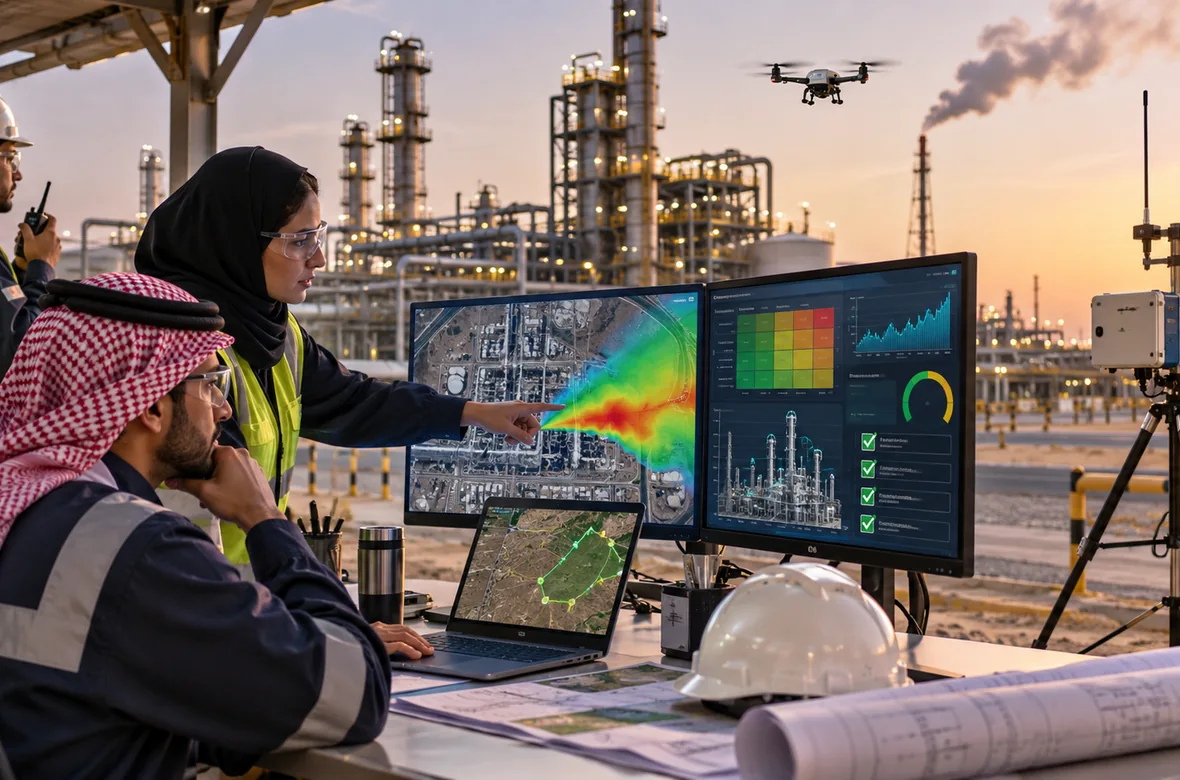
Environmental modelling examines how pollutants or environmental effects move through different media. The technical model is selected according to the emission source, data availability and study objectives.
Methods, deliverables and technical responsibilities are subject to the project scope, applicable requirements and available qualifications.
Scope of Work
Identify sources, site settings, meteorology and relevant environmental inputs.
Select a suitable approach for air dispersion, noise, hydrodynamics, groundwater or mixing zones.
Assess relevant scenarios and potential sensitive receptors.
Present interpreted results, assumptions and limitations of the model.
Expected Deliverables
Technical methods note with input datasets and assumptions.
Scenario summaries and illustrative impact maps.
Mitigation, monitoring and validation recommendations.
Where This Applies
Specialist Questions
Does one model cover every environmental medium?
No. Model selection depends on project conditions, data availability and the agreed technical scope.
Are predictions the same as actual monitoring measurements?
No. Modelling provides estimates dependent on assumptions and inputs, often requiring comparison with actual monitoring data.